

4.9 from 245 Google reviews21 UK dental awardsAward-winning hygiene
Hoe Road, Bishops Waltham · Open Mon–Fri, until 7pm Mon–Thu
Skip to content
Clear Dentistry
Book a consultationCall 01489 892240

Dental implants

Single and multiple implants

A dental implant is the closest thing dentistry has to a natural tooth: a titanium fixture placed in the jaw, with a precisely made crown on top. No plate to remove, no reliance on neighbouring teeth, no daily reminders that you have lost something. Just a tooth.

  • 3D CBCTevery implant planned virtually
  • Guided surgery3D-printed surgical guides
  • Sedationin-house consultant anaesthetist
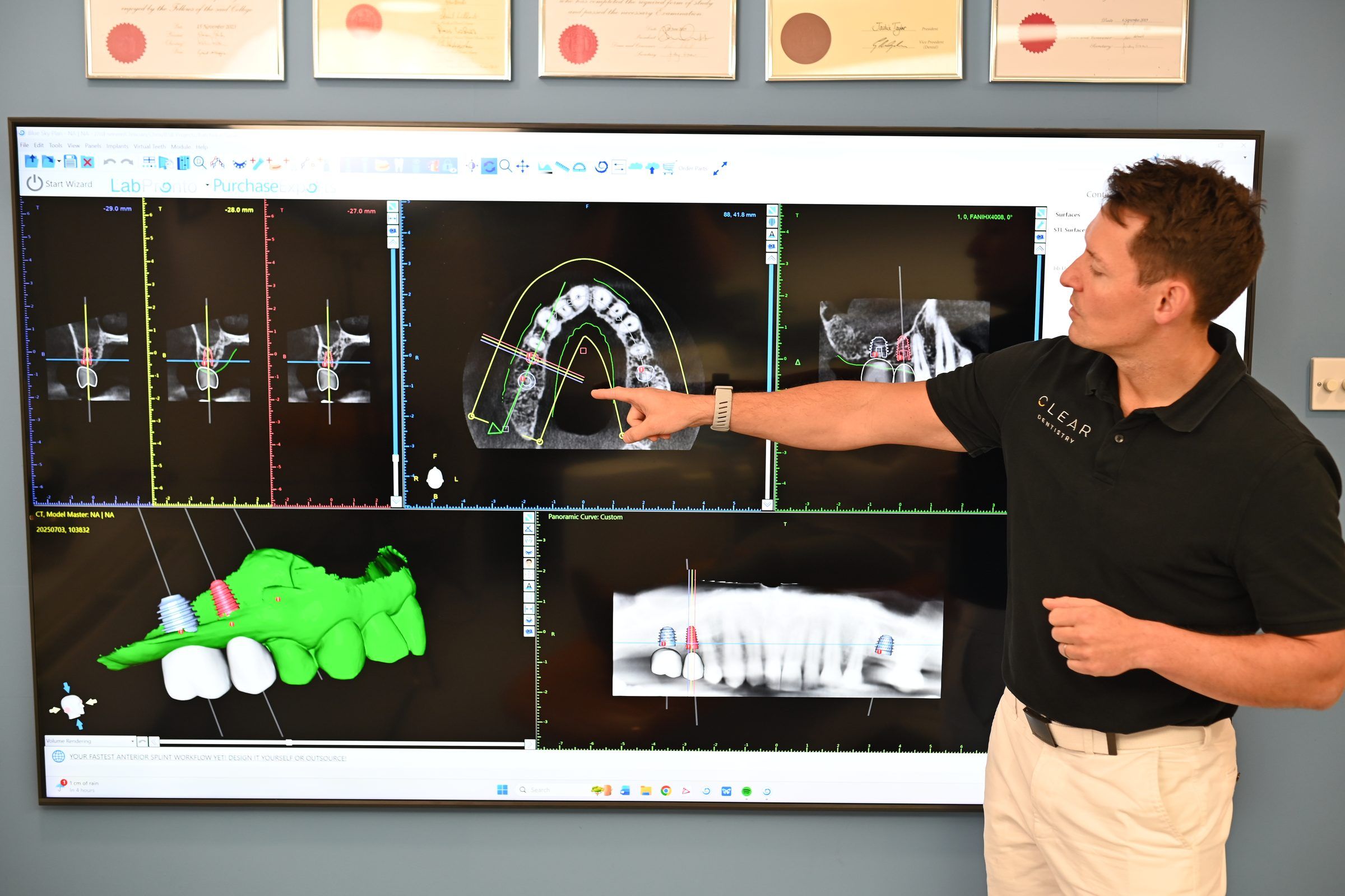
Dr Chris Leech pointing out implant positions on a 3D CBCT scanAt the practice
Planned virtually firstEvery implant position is planned in three dimensions before any surgical step

About single and multiple implants

A tooth that feels like your own, because it should

Why implants preserve more

When you lose a tooth, the bone beneath it starts to shrink. Bridges and dentures sit on top of the gum and do nothing to stop that. An implant integrates with the bone and stimulates it the way a natural root does, maintaining the structure of your jaw over time. A bridge also needs the neighbouring teeth cut down as supports; an implant is self-supporting and leaves them untouched. For most suitable patients, an implant is the better long-term investment.

Am I suitable?

Most adults in good general health are. The key factors are enough bone at the implant site, healthy gums, and no uncontrolled medical conditions. Where bone has been lost after an extraction or gum disease, grafting can often recreate the right environment. Your consultation includes a CBCT scan and an honest suitability assessment, and if a different treatment is the right call we will say so.

Digital, guided surgery

Every case is recorded and planned digitally: no impression material, no plaster models. Dr Leech places implants using guided surgery, where a 3D-printed guide positions the implant exactly where it was planned. That makes placement safer, faster and more predictable. Where possible the tooth is removed and the implant placed in the same visit, and many patients choose sedation from our consultant anaesthetist to make the whole procedure forgettable.

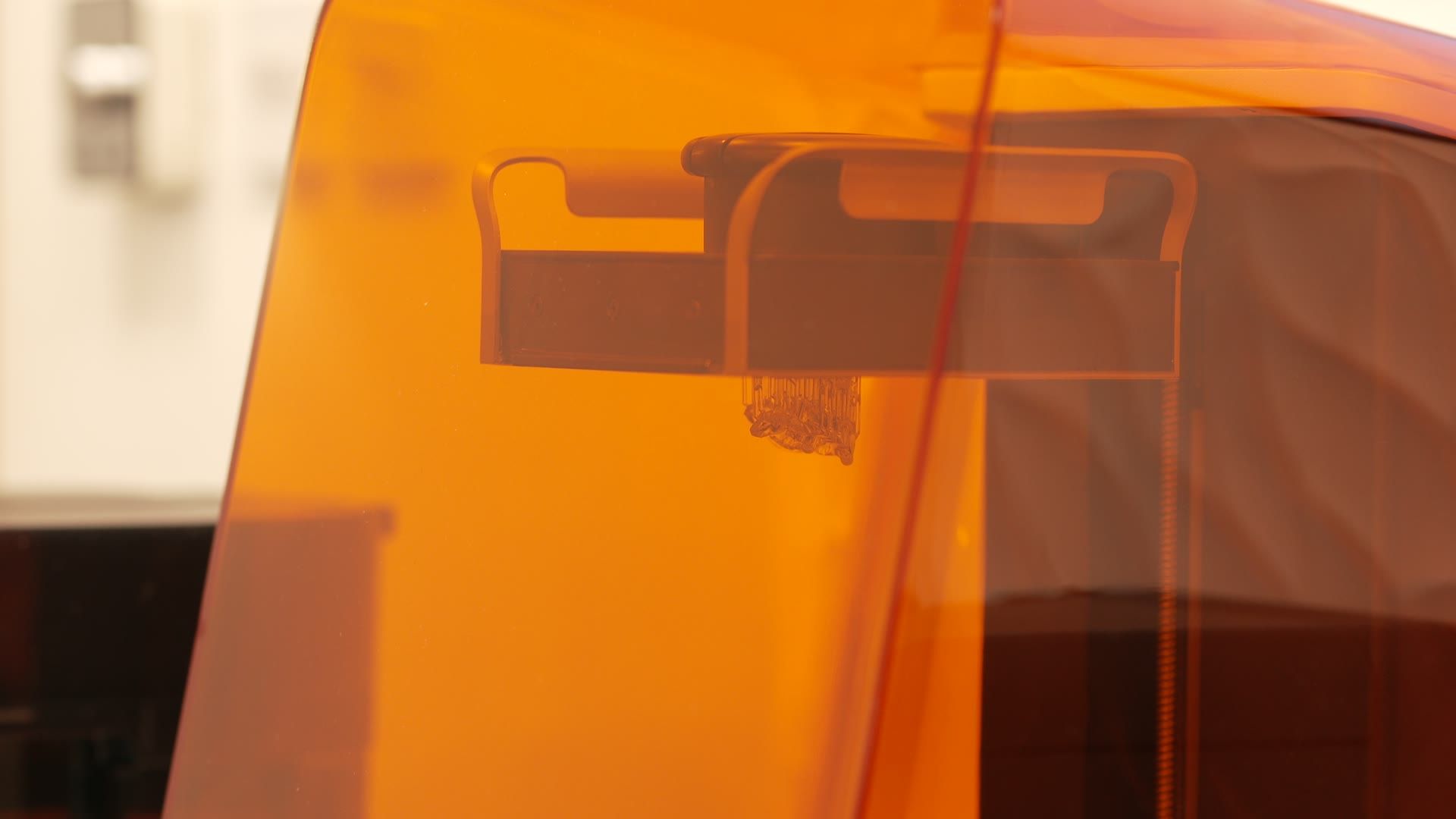
Surgical guides, printed at the practice, on the build platform of the 3D printer

How implant treatment works

Planned in 3D. Placed with care.

The years after surgery matter every bit as much as the day of placement, so your hygiene and maintenance are planned from the start.

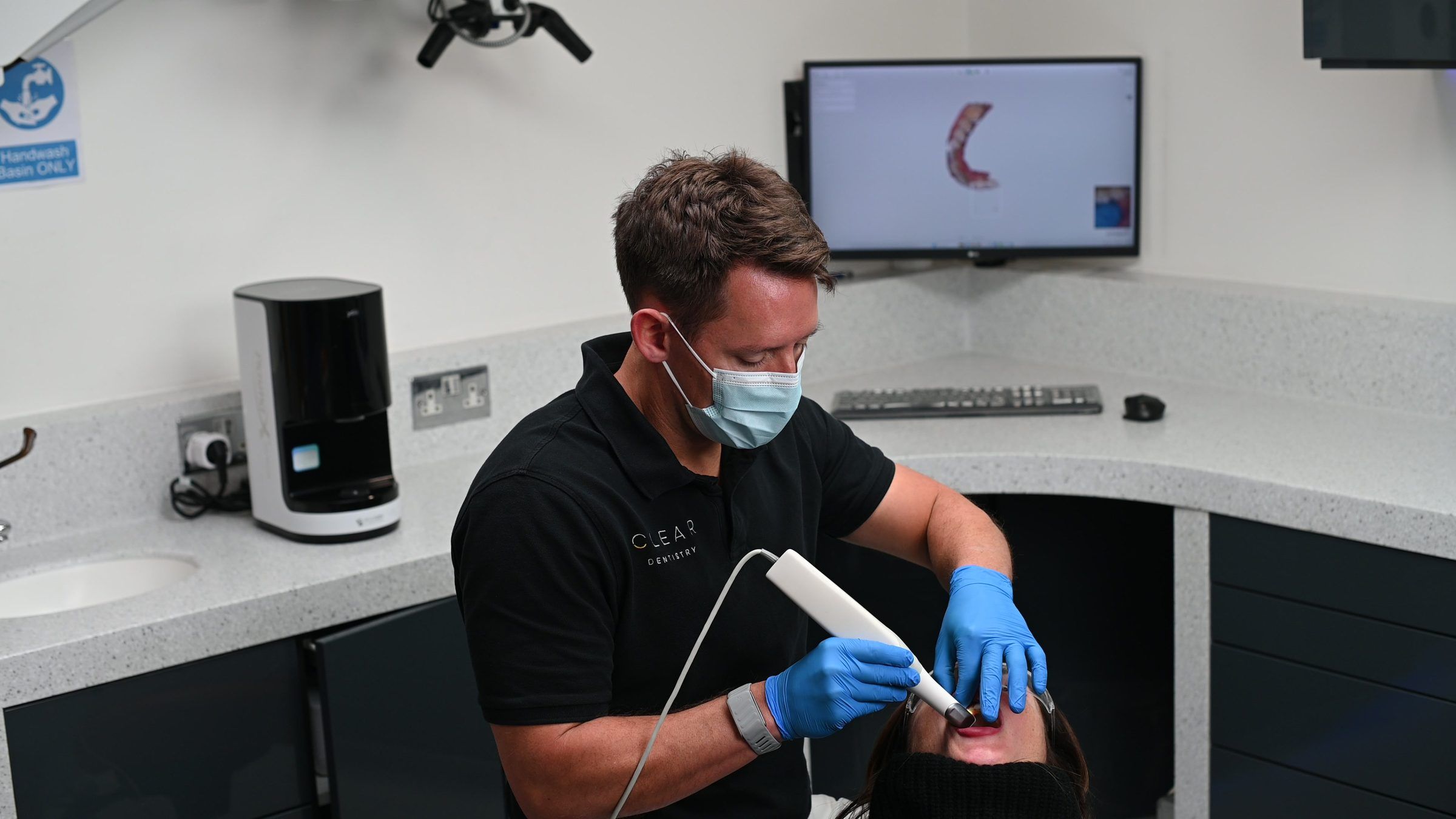
A dentist taking a digital scan, the 3D model building on screen
  1. 01 · Consultation

    Scan and assess

    A full assessment with CBCT imaging, and an honest view on whether implants are right for you.

  2. 02 · Planning

    A virtual plan

    The implant position is planned in three dimensions and shown to you on screen, then a surgical guide is 3D printed from it.

  3. 03 · Placement

    Comfortable surgery

    Placed under local anaesthetic, with sedation if you want it. The implant then integrates with the bone over three to six months.

  4. 04 · Restore

    The final crown

    Once the implant is stable, the crown or bridge is fitted. Our hygiene team then looks after the soft tissue and maintenance that keeps it healthy.

Read the transcript

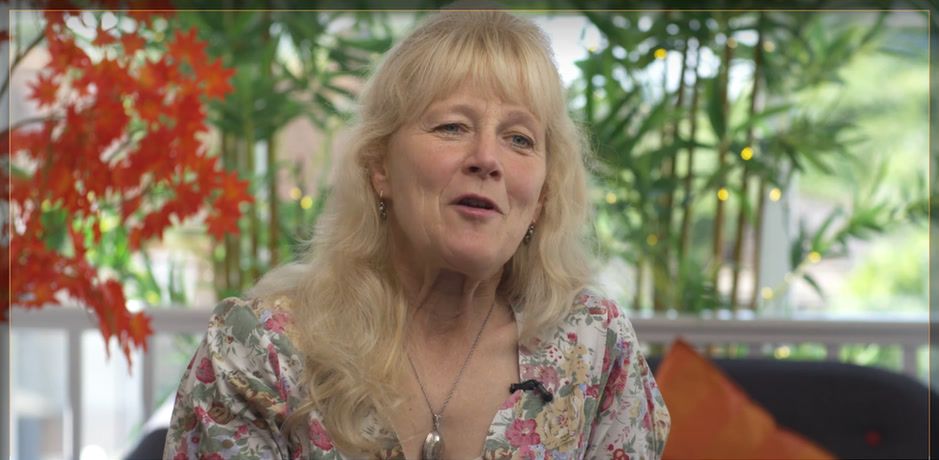
Well, I had to have an implant. I lost my front tooth while I was on holiday, which is an awful experience. I couldn't speak properly, I couldn't eat properly and I couldn't smile at anybody. Obviously, the first thing I did was came to see the doctors at Clear Dentistry. They talked through with me my options of having a denture, having a bridge or having an implant. I was able to make an informed choice of what I could afford and what was best for me. They then put a sort of a program written out so that I would see how many times I would have to come, what the treatment was going to be. So, it was good to be able to understand the whole process of having an implant. I was never in any pain at all. I said quite a few people, can you tell which tooth is the implant? And nobody can tell. Even my friend who's a dental nurse couldn't tell which tooth was the implanted one. I can't imagine finding a better dental practice anywhere else. You know, if I had to move to another county, I'd probably make the trip back.

Patient story · 1:23

“I asked quite a few people, can you tell which tooth is the implant? And nobody can tell.”

Pamela lost a front tooth on holiday. She describes being talked through a denture, a bridge and an implant, choosing the implant, and never being in pain.
Common questions

How long do dental implants last?

Done properly, an implant can last many years. Our best evidence is patients who had theirs placed years ago and have forgotten they are there. Longevity depends on good home care, regular check-ups and factors like whether you grind, all of which we plan around during your treatment.

Am I suitable if I had the tooth out a while ago?

Possibly. It depends on how much bone remains at the site, because the jawbone resorbs over time once a tooth is lost. In some cases bone grafting can recreate the right environment. We use detailed scans to assess your anatomy and will always tell you honestly whether an implant is the right option, and if not, what the alternatives are.

Why choose an implant over a bridge or denture?

An implant is the only replacement that integrates with the jawbone, stimulating it like a natural root and preventing the bone loss that happens under bridges and dentures. It is self-supporting, so neighbouring teeth are left untouched; a bridge needs healthy teeth cut down. For most suitable patients, an implant is the better long-term investment.

What does the process involve, and how long does it take?

After assessment and planning, the implant is placed surgically under local anaesthetic; most patients are surprised how manageable it is. The implant integrates with the bone over roughly three to six months, then the crown is fitted. Most patients find the result well worth the timeline.

How much does an implant cost?

A single dental implant starts from £1,799.95. The final cost depends on whether grafting is needed and how many teeth are being replaced, so you will always have a personalised written quote before any treatment begins.

Clinically reviewed by Dr Christopher Leech (GDC 113615), 14 October 2026.

Patient reviews

4.9

From 245 genuine Google reviews

Read all reviews

New patients welcome

Start with a clear picture.

Your first visit includes a full oral health assessment, digital imaging where it helps, and a clear explanation of what we find.

Find us

Hoe Road, Bishops Waltham
Hampshire SO32 1DS

Opening hours

Mon–Thu
8:00am – 7:00pm
Friday
8:00am – 5:30pm
Dr Chris Leech and Dr Leigh Knowles
4.9245 Google reviews
Book a consultation

Book a consultation

How would you like to book?

Book directly onlineChoose a time in our online booking system, with live availability.Book onlineOpens our booking system in a new tab.

Rather talk to someone? Call us on 01489 892240.