

General dentistry
Root canal treatment
Root canal treatment has a reputation it does not deserve. Done properly, under local anaesthetic, it is about as uncomfortable as having a filling, and it saves a tooth that would otherwise have to come out. We catch problems early and do the treatment properly.
- Local anaestheticthroughout treatment
- 1–2 visitsusually
- From £599.95root canal treatment
About root canal treatment
It's really not that bad
When it's needed
The pulp is the soft tissue inside a tooth that carries its nerve and blood supply. When it becomes infected or inflamed, through deep decay, a crack, repeated dental work or an injury, it needs treating. Left alone, infection can spread into the surrounding bone and cause an abscess.
Symptoms can include severe toothache, prolonged sensitivity to hot or cold, pain on biting, swelling and a darkening tooth. Sometimes there are no obvious symptoms until the infection is well established, which is one reason regular check-ups matter.
What it involves
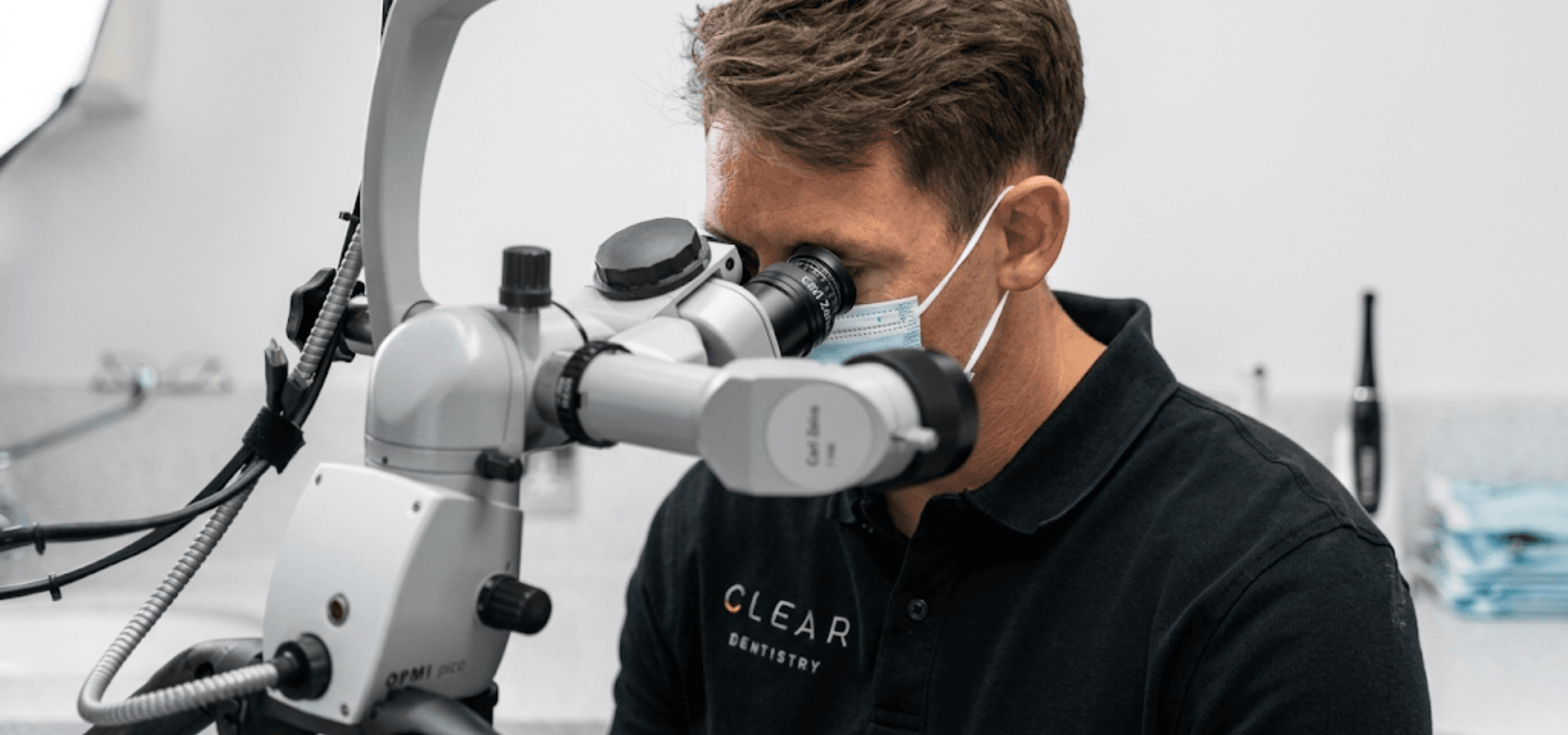
We remove the infected pulp, clean and shape the root canals, and seal them to prevent reinfection. The tooth is then restored, usually with a crown, to protect and strengthen it. Treatment is carried out under local anaesthetic, so you should not feel pain during it; some tenderness in the days afterwards is normal. We use rotary instruments and digital X-rays to work accurately, and most teeth take one or two appointments.
The alternative, and why we prefer saving teeth
The alternative is extraction. Sometimes that is the right call, but not always. A natural tooth, saved and restored well, keeps the bone around it, works better under load, and avoids the cost and complexity of an implant or bridge. We believe in keeping teeth wherever we can, for as long as we can. If you are in pain or worried about a tooth, do not wait: call us and we will see you quickly.
How it works
Clean, seal, protect
Accurate work, usually finished in one or two visits.
01 · Diagnose
X-ray and assess
A digital X-ray shows the extent of the infection and whether the tooth can be saved. We show you on screen.
02 · Numb
Local anaesthetic
The tooth is fully numbed, so the procedure itself should be pain-free. Sedation is available if you are anxious.
03 · Treat
Clean and seal
The infected pulp is removed, the canals are cleaned and shaped with rotary instruments, and sealed against reinfection.
04 · Restore
Usually a crown
Most back teeth need a crown afterwards to protect and strengthen them. We plan that with you from the start.
Common questions
Is root canal treatment really as painful as people say?
Genuinely, no. Under proper local anaesthetic the procedure itself should be pain-free, and most patients say it is about as uncomfortable as having a filling. Saving the tooth is well worth it.
How do I know if I need it?
Common symptoms are severe toothache, prolonged sensitivity to hot or cold, pain on biting, swelling, or a discoloured tooth. Sometimes there are no obvious symptoms until infection is well established, which is one of the reasons regular check-ups matter.
Can the tooth be saved, or will I lose it anyway?
In the vast majority of cases, yes. What happens afterwards matters: most back teeth need a well-made crown to protect and strengthen them. A tooth saved and restored properly is nearly always preferable to extraction and replacement.
How many appointments does it take?
Usually one or two, depending on the tooth. Some tenderness for a few days afterwards is normal, and most patients find the recovery far more straightforward than they expected.
Clinically reviewed by Dr Leigh Knowles (GDC 76315), 14 October 2026.